
How shared leadership, strong benches, and encouragement from every seat help teams thrive in the messy middle
My obsession with the natural world is not new. And still, I’m always delighted when a fresh metaphor drops into my lap.
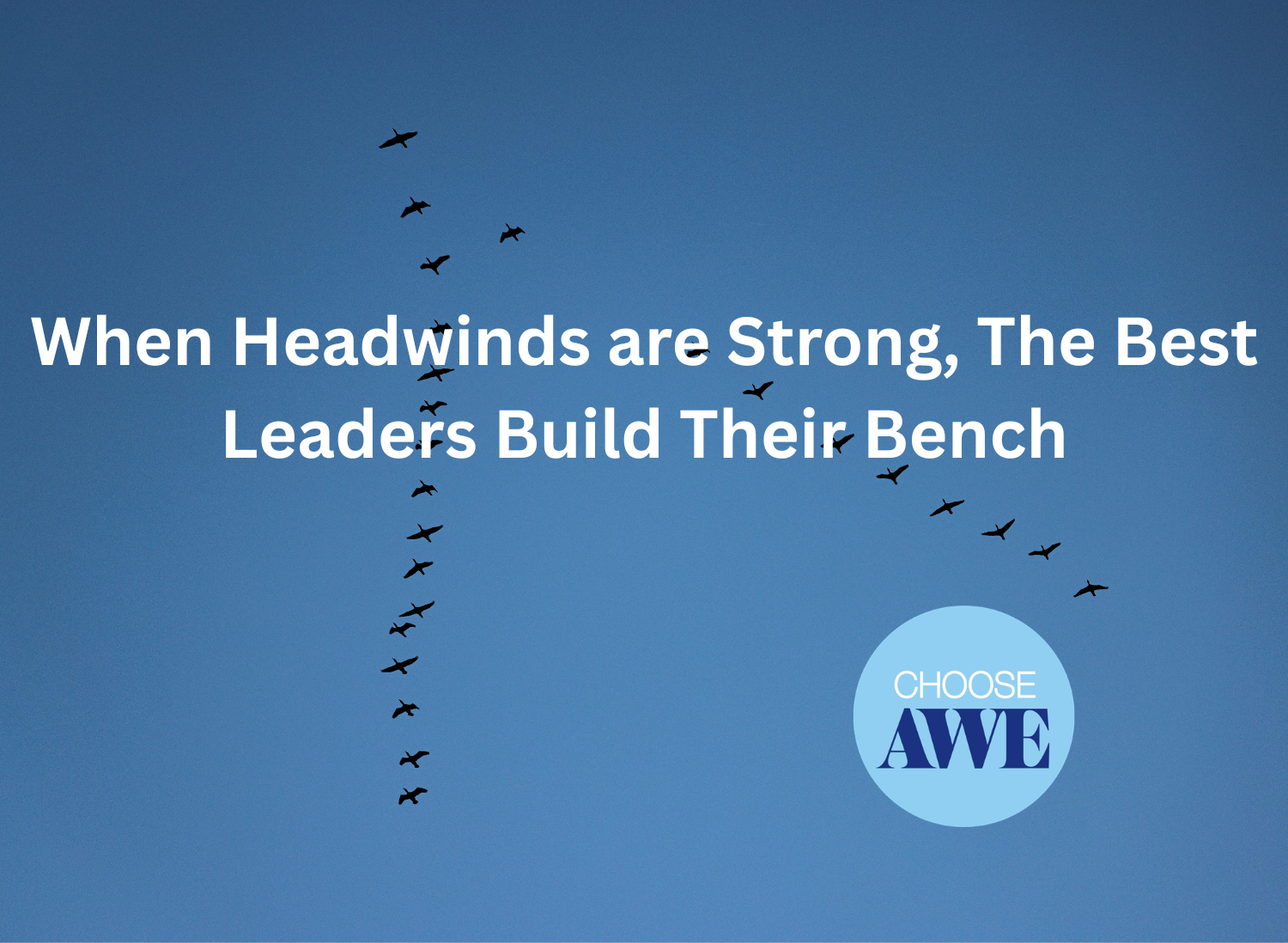
Most recently, I found myself—quite literally—in AWE of birds flying in V formation. I’d seen it countless times, but I had never paused long enough to ask why. (And if I’m being honest, inspiration struck while I was driving—so my daughter did the research for me.) What we discovered is something called upwash—and everything about it is intentional.
Leadership Isn’t About Flying Alone
Birds fly in V formation to reduce drag. Each bird benefits from the uplift created by the bird flying just ahead of it. The bird out front works the hardest. But that role is never permanent. At any moment, another bird is ready to step up and in and take the lead.
This is a powerful reminder for us as leaders: leadership isn’t about holding the front position at all costs—it’s about preparing others to lead when the moment calls for it.
Upwash is not weakness. It’s strategy.
The Strength of a Bench
A strong bench allows leaders to delegate without fear. It creates confidence that when pressure increases—or when a leader needs to step back—others are ready to step forward. Succession, then, isn’t about replacement. It’s about resilience.
Developing leaders to take the “lead bird” role prepares them not just for responsibility, but for perspective. It helps them understand—early on—the wisdom of building a bench long before they think they need one.
A strong bench doesn’t dilute leadership. It multiplies it.
Encouragement from the Back
No matter where you are in an organization—or in the formation—you can lead from where you are.
In bird formations, those flying at the back play a critical role. They honk loudly to encourage the birds in front. They also help keep watch for danger. Think of it like a teammate cheering from the sidelines when they’re not on the field.
Culture is shaped not only by who is in charge, but by how people support one another. Creating an environment that rewards partnership, collaboration, and acknowledgment activates this kind of leadership everywhere.
Sometimes, the most powerful leadership move is encouragement.
What Upwash Looks Like on Real Teams
- Noticing overload before someone burns out
- Stepping in without being asked
- Sharing credit and visibility
- Rotating leadership when it matters most
- Empowering team members to fully own and lead projects
This is the kind of leadership that thrives in the messy middle—because when things feel unclear or uncertain, connection becomes a stabilizer.
What’s striking is how closely this natural metaphor aligns with what leadership research continues to show. Research on psychological safety, led by Amy Edmondson, consistently shows that team performance is more sustainable when people feel safe to speak up, share responsibility, and support one another. Studies on shared and distributed leadership and burnout prevention all point to the same truth: performance is stronger and more resilient when responsibility, encouragement, and leadership are shared across a system. Teams that normalize stepping up, speaking up, and supporting one another outperform those built around heroic, always-on leaders. Nature figured this out long before we named it—shared lift conserves energy, reduces burnout, and allows the group to go farther than any one individual could alone.
Choose AWE: A Leadership Practice
Upwash invites us into a different way of leading—one rooted in AWE.
Awareness asks us to notice when we’re carrying more than we should, or when someone else is struggling under the weight of the work.
Willingness challenges us to step up, step back, or step alongside—depending on what the moment calls for.
And Energy reminds us that leadership isn’t just about output; it’s about creating the conditions that allow people to sustain momentum without burning out.
When we choose AWE, we stop flying alone.
We build benches.
We offer encouragement.
We create lift—for ourselves and for one another.
That’s how leaders and teams don’t just survive headwinds.
They rise through them—together.
If you are navigating a particularly messy moment, let’s connect.